Heads Up!
- 4.5
- Rating
- 10.00M
- Installs
- Free
- Price

 Analysis by App-foxy
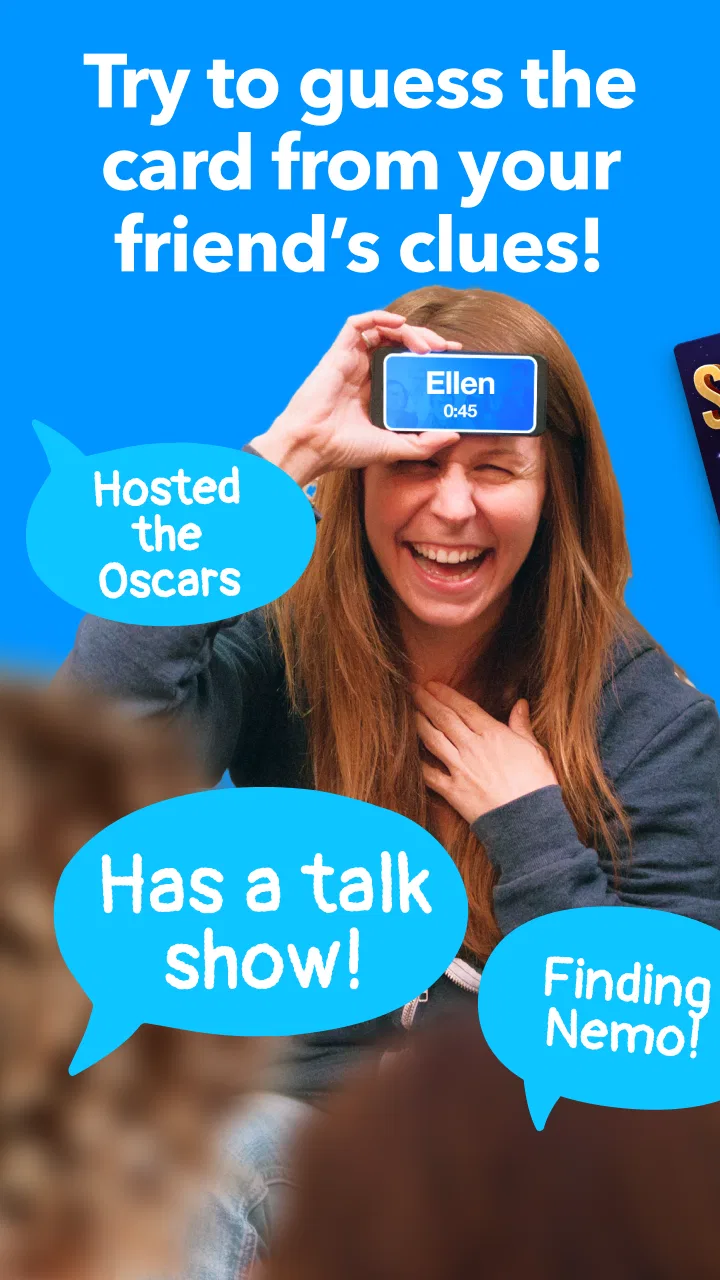
I have always liked party games that can be explained in one sentence and started before anyone has time to lose interest. Heads Up! fits that mood well: one person holds a phone against their forehead while the rest of the group gives clues, and the holder tries to identify the word or phrase on screen. It is a word game, but the real test is communication, timing, nerve, and the ability to stay focused while several friends talk at once.
After spending time with it, I see it as a particularly good choice for casual gatherings rather than a game I would play alone every day. It works at a living-room party, during a family visit, or as a quick activity when a group has a few spare minutes. The basic idea is familiar, yet the phone-based format removes the need for cards, a board, or a complicated explanation. You can be playing almost immediately.
Developed by Warner Bros. International Enterprises, the game is free to download and suitable for Everyone. It has reached over ten million installs, with an average rating of 4.1 from around two hundred thirty-three thousand ratings. Those figures suggest a broad audience, although they also hint at the usual split: many people enjoy the instant party energy, while others may find the experience repetitive or too dependent on having the right group.
You May Also Like

 Blood Strike: 2.5 Anniversary
Blood Strike’s Loadouts Turn Every Drop Into a Tactical Gamble
A close look at Blood Strike’s custom loadouts: how fast access to signature weapons reshapes its battle royale rhythm, rewards preparation, and narrows the gap between fights.

 Pandora - Music & Podcasts
Pandora’s Music Is Easy to Start, but Harder to Recover
Pandora’s strength is its low-effort path from a seed to a station. Its weak spot is how much confidence it asks you to place in connection, setup, and quiet recovery.

 8 Ball Pool
 Is Built on Rivalries, Rematches, and Routine
A close look at the rivalries, rematches, shared routines, and unanswered safety questions that turn a quick pool match into a persistent mobile community.

 Samsung Music
’s Quiet Strength Is Playing What You Already Own
Its reach comes less from spectacle than from dependable access to a personal library. That simplicity is both the app’s strongest retention engine and its ceiling.

 AccuWeather: Weather Radar
AccuWeather Review: A Quick, Clear Forecast for Everyday Decisions
For everyday plans, the best forecast is the one you can understand quickly. AccuWeather makes rain timing, radar, and local conditions easy to act on, with a few trade-offs.

 Hill Climb Racing
Why Hill Climb Racing Still Turns Crashes Into One More Run
A tiny car, a bumpy hill and one more upgrade: Hill Climb Racing keeps resurfacing because its simple chaos makes every near-miss feel personal.
More From Our News Desk



How a normal round actually feels
The baseline workflow is simple. I choose a deck or topic, place the phone where the other players can see it, and hold it up to my forehead. The people around me give verbal hints without saying the displayed answer directly. I then try to guess as quickly as possible, while the group reacts to my guesses and keeps the pace moving.
That simplicity is one of the strongest parts of the design. A new player does not need to understand a menu tree, learn a scoring system, or read instructions for several minutes. Someone can join halfway through a gathering and understand the rules after watching a single turn. For a party game, that matters more than a large collection of complicated mechanics.
The phone also creates a useful social role for everyone in the room. The active player is performing, but the rest of the group is not waiting passively. They have to agree on clues, decide how much help to give, and react quickly when a guess goes in an unexpected direction. I find that this makes the game more engaging than a standard quiz where one person answers and everyone else simply watches.
A realistic everyday use is a dinner with friends that finishes earlier than expected. Instead of opening a long board game, one person can start a short round while people are still sitting around the table. Another good moment is a family gathering where ages and gaming experience vary. The rules are accessible enough for children and adults to share a turn, although younger players may need help understanding what counts as a useful clue.
The game is at its best when the room is willing to be loud and slightly silly. A quiet group can still play, but the energy drops because the clues become cautious and the guesses take longer. It is also worth remembering that the holder cannot see the screen. The fun depends on trust: the people giving hints have to follow the rules rather than quietly reveal the answer through gestures or overly obvious wording.
Building a smoother first session
For a first-time group, I recommend starting with a topic that everyone recognizes instead of choosing something specialized. This avoids a common frustration where the player knows the rules but has no useful connection to the prompt. Once the group understands the rhythm, more challenging categories become enjoyable rather than confusing.
I also prefer to establish the clue rules before pressing start. Are gestures allowed? Can someone use a synonym? Is singing acceptable? Different groups naturally make different choices, and that is fine, but agreeing in advance prevents arguments when a player gets close to an answer. The app supplies the prompt; the group supplies the house rules that determine how competitive the round feels.
Another practical habit is to keep the phone at a comfortable height rather than waving it around. The person holding it needs to hear the clues, and the other players need a clear view of the screen. In a crowded room, standing in a loose semicircle works better than having everyone speak from different directions. This is not a special feature, but it makes a noticeable difference to the experience.
Settings and habits that are worth checking
Before a serious session, I would look through the available deck and round options rather than accepting the first choice automatically. The right selection depends on the group. A familiar subject produces quick guesses and a relaxed atmosphere, while a less familiar one creates more discussion and often more accidental comedy. The best option is not always the hardest one; it is the one that matches the people in the room.
It is also sensible to check the phone’s general sound level before beginning. This game relies on spoken clues, so a loud environment can become a real obstacle. If the device is connected to something that makes alerts or other sounds more prominent, I would silence distractions first. The goal is not to make the game technically impressive; it is to make every clue understandable.
Because the player holds the device close to the face, screen visibility matters for the people giving hints. I find that a bright enough display and a position facing the group reduce accidental pauses. If the screen keeps rotating or the phone is difficult to hold securely, the round becomes about managing the device instead of guessing. A stable grip is a small preparation step with a large payoff.
One useful group habit is to appoint someone as the informal round organizer. That person can choose the next deck, hand the phone to the next player, and keep the turn order moving. Without this role, the same people may dominate the game while quieter participants hesitate. The app makes the guessing easy; the group still needs a little structure to make participation feel balanced.
I would also decide how to handle skipped prompts before starting. A player may encounter a word they do not know, or the group may realize that the clue is awkward for the people present. Treating every skip as a failure can make the game unnecessarily tense. A more enjoyable approach is to use skips sparingly and keep the emphasis on momentum, especially when the gathering is social rather than competitive.
There is a financial detail worth considering as well. The game is free, but in-app purchases range from five cents to $39.99 per item. I would begin with the free experience and only consider an extra purchase if the group has already played enough to know it wants more variety. That approach avoids paying for content before discovering whether the game suits your friends, family, or event.
Making the phone work for the group
The most effective “shortcut” is really a repeatable setup. Choose the deck, confirm the rules, place the phone in the holder’s hands, and start without passing it around for long explanations. When each turn follows the same sequence, the game feels faster and the group spends more time giving clues.
I also like rotating the clue-givers rather than letting the loudest person answer everything. One player can be good at describing objects, another at acting, and another at connecting ideas to films or everyday situations. Changing who leads the clues keeps the game from becoming a contest between one performer and a silent audience.
For mixed-age groups, I would let the younger or less experienced players go early. They get a chance to learn the rhythm while everyone is still patient. If the first round is too difficult, the group can adjust its clue style instead of blaming the player. This is especially helpful when the topic includes references that are obvious to adults but unfamiliar to children.
For a more competitive evening, I would keep turns similar in length and avoid lengthy debates after every guess. For a relaxed evening, I would do the opposite and allow funny explanations to continue after the prompt is solved. The same app supports both moods, but it does not automatically decide whether your group wants speed, fairness, or conversation. That choice belongs to the players.
Recording the round can add entertainment, but I would treat that as optional and considerate rather than central to the game. Some people enjoy seeing their exaggerated clues later; others do not want a camera pointed at them. The important point is that the game already works without extra production. Adding phones, cameras, or elaborate scoring can easily distract from the quick exchange that makes it appealing.
Where experienced play becomes more interesting
After a few sessions, I noticed that success depends less on knowing every answer and more on giving clues that match the holder’s way of thinking. If the player responds well to categories, start broad and narrow down. If they respond to examples, describe a familiar situation. If they tend to overthink, use short, direct clues and avoid adding several possible interpretations at once.
This creates a useful advanced habit: learn the clue-giver and player pairings. Two friends who know each other well may solve prompts quickly because they share references, while strangers may need clearer descriptions. That does not make one pairing better than the other; it changes the style of play. I find that rotating partners reveals how much of the game is communication rather than simple vocabulary.
Another strong technique is to avoid repeating a failed clue in slightly different words. If the player does not understand the first explanation, repeating it usually produces the same result. A better approach is to switch from definition to example, from example to gesture, or from a general description to a familiar context, depending on the rules the group has chosen.
There is also a trade-off between speed and fairness. Fast clues create exciting rounds, but they can favor players who already know the deck or who are comfortable speaking over others. Slower, more deliberate clues make the game accessible to more people but reduce the comic chaos. I would not try to maximize both at once. Decide which quality matters for that particular gathering.
For repeat sessions, I recommend changing the social format even when the app remains the same. A family can play individual turns, friends can divide into teams, and a small group can let everyone contribute clues at once. These variations do not require inventing new app systems; they simply use the same prompts in different ways. That helps the game stay fresh longer than repeating one identical routine.
Limits that become clearer over time
The biggest limitation is that this is not a solo word game. If I am alone, there is no satisfying way to use the central guessing format. Even with two people, the experience can feel narrow because one person gives nearly every clue and the other does nearly every guess. It becomes much more enjoyable when several people can react, interrupt, and share the responsibility.
The game can also become repetitive if the same group plays frequently without changing topics or house rules. The core action remains guessing words from spoken clues, so players who want deep progression, strategic planning, or a long-term campaign should look elsewhere. A traditional word board game may be better for people who enjoy building a score over many turns, while a crossword or word puzzle app is a better fit for quiet solo play.
Noise is another real weakness. In a busy room, the player may hear several clues at once, and the group can lose track of which prompt is being discussed. This is part of the party atmosphere, but it can also make the game tiring. If your gathering is in a loud public place or includes people who struggle to hear speech clearly, a visual word game may be a more considerate alternative.
The free-to-start model deserves practical attention. Since optional purchases can reach $39.99 per item, I would be careful around younger players or shared family devices. The game is easy to understand, and that makes it easy for someone to tap through a purchase decision quickly. I would handle buying extra content deliberately, after deciding that the existing experience has earned more use.
Compatibility is reasonably broad for a modern phone, with the current version listed as 4.15.5 and support beginning at Android 8.0. That makes it available to many users, though anyone with an older device should check compatibility before planning a party around it. The game’s value depends heavily on having one dependable phone ready when the group gathers.
Who should download it, and who should skip it?
I would recommend it to people who want an instant activity for friends, relatives, or small parties. It is especially suitable when the group contains mixed gaming experience, because the rules are visible through play rather than hidden behind a tutorial. It also works well for hosts who do not want to buy or carry a physical game box.
It is a good match for outgoing players, but shy participants can enjoy it when the group is supportive. The best way to include them is to let them start with a familiar topic and give them enough time to settle into the format. Forcing someone into a difficult category while everyone shouts at once can make the game feel embarrassing rather than funny.
I would skip it if you are looking for a substantial solo experience, a serious vocabulary workout, or a game with meaningful strategic depth. I would also choose another option for a gathering where people prefer calm conversation and do not want to perform. The app is built around quick public reactions, so its strengths become weaknesses when the room wants privacy or concentration.
Compared with charades played without a phone, it offers a more consistent stream of prompts and makes the target visible to the clue-givers. Compared with a physical word game, it requires less preparation and occupies less table space, but it also depends on a charged, compatible device. Compared with solo word puzzles, it is far more social but much less useful when nobody else is available.
My verdict after settling into a repeatable routine
My final impression is positive, with a clear condition: the people matter more than the app. When the group agrees on clue rules, chooses a suitable topic, keeps the phone visible, and rotates turns fairly, the game creates quick laughter with very little setup. Those habits are more valuable than chasing the hardest prompts or trying to make every round perfectly competitive.
The rating of 4.1 and the large audience make sense to me. This is an accessible party game with a strong first-session payoff, but it is not designed to satisfy every kind of word-game player. Its appeal comes from shared reactions, improvised clues, and the small failures that make everyone laugh. If your friends enjoy that kind of interaction, it can become a reliable gathering staple.
I would start with the free version, test it with the people who will actually play, and pay attention to whether the room stays engaged after the novelty fades. If the answer is yes, additional content may be worth considering, while the purchase range makes it sensible to be selective. If the group prefers puzzles, strategy, or quiet play, there are better alternatives in those areas.
For me, the strongest reason to keep it installed is convenience. I can turn an unplanned wait, family visit, or relaxed evening into a shared game without explaining a complicated system. Its real strength is the repeatable social rhythm: choose a topic, set clear clue expectations, keep turns moving, and let the group’s personality do the rest. That is why I would recommend it to a friend who wants a fast, friendly word game rather than a deep standalone gaming experience.
FAQs for Heads Up!
01What is Heads Up! and how does it work?
Heads Up! is a fun and interactive guessing game where players try to guess words or phrases that appear on a card held to their forehead. The clues are provided by teammates who give hints without saying the word. It’s a great game for parties or gatherings and is available on both Android and iOS.
02Can I play Heads Up! offline, or do I need an internet connection?
Heads Up! can be played offline once downloaded, making it perfect for on-the-go entertainment or when you're in areas with limited connectivity. However, an internet connection is required to download additional card packs and updates to enhance gameplay.
03Is Heads Up! suitable for all age groups?
Heads Up! offers various themed decks that cater to different age groups and interests, making it suitable for players of all ages. From kid-friendly decks to more challenging ones for adults, it ensures everyone can join in on the fun. Always check the deck content for age-appropriate themes.
04Are there in-app purchases in Heads Up!?
Yes, Heads Up! includes in-app purchases. While the app comes with free decks, there are additional themed packs available for purchase. These offer new challenges and variety, allowing users to customize their game experience according to their interests.
05How can I customize my game experience in Heads Up!?
Heads Up! allows players to customize their experience by purchasing additional card packs with different themes from movies, animals, accents, and more. The game also offers the option to create custom decks, enabling players to add personal flair and tailor the game to specific events or interests.
Pros
- Fun and engaging party game.
- Simple rules
- easy to learn.
- Wide variety of categories.
- Great for all age groups.
- Encourages teamwork and laughter.
Cons
- Requires multiple players.
- In-app purchases can add up.
- Limited offline play options.
- Some categories feel repetitive.
- May drain battery quickly.

Heads Up!
Gallery